











Many teams start by searching for the best email verification API because they want cleaner data, fewer bounces and better email deliverability. That is a valid starting point. But before writing code, mapping API responses and testing edge cases, the better first question is simpler: do you need real-time validation inside an application, or do you only need to clean a large email list before sending?
Use an email verification API when validation must happen inside a signup form, checkout page, lead capture flow or product workflow. Choose bulk email verification when you already have an existing list, CRM export, cold outreach file or campaign audience that needs checking before sending.
TrustSender.io fits this second scenario: upload a large list, run massive email validation through the web app, separate deliverable, risky and undeliverable results, and prepare campaign decisions without spending engineering time on API setup.
Quick answer
The best email verification API depends on the workflow. Use an API when validation must happen inside an app, form or product flow. Choose bulk email verification when the immediate need is to clean a large list before outreach. This bulk workflow can be faster, simpler and more cost-effective when there is no need to build, test and maintain a real-time integration.
Key takeaways
- Use an email verification API for embedded, continuous and real-time validation workflows.
- Choose bulk email verification for existing lists, CSV files, CRM exports and cold outreach preparation.
- API setup requires authentication, backend integration, retries, logging, result mapping, testing and monitoring.
- For many teams, the urgent problem is not integration. It is knowing which records are safe, risky or undeliverable before sending.
- Do not treat disposable, catch-all and role-based emails the same as clearly valid or invalid records.
- A Day Pass workflow can help teams clean large lists on specific days without wasting money on a monthly subscription.
What an email verification API does
An email verification API lets software check email addresses through code. A typical integration sends an email address to an endpoint and receives a structured response with validation signals, risk indicators or a final recommendation.
A basic format check can confirm that an address looks like an email. A stronger email validation API can go further by checking syntax validation, domain validation, MX record validation, disposable domains, catch-all behavior, role based email patterns and other signals that help estimate bounce risk.
This matters because email verification is not a single yes-or-no check. An address may be correctly formatted but still risky. A domain may accept mail but behave as catch-all. A disposable inbox may work temporarily but be unsuitable for long-term communication. A role-based address such as admin@ or sales@ may be valid but less useful for personalized cold outreach.
Best email verification API decision: API or bulk workflow?
The phrase “best email verification API” often assumes that an integration is the answer. Sometimes that assumption is correct. When a product must validate every new signup automatically, an API fits the architecture. If your form must reject disposable emails in real time, an API also makes sense.
But many email validation problems are not real-time product problems. They are campaign preparation problems. A founder, agency, sales team or operator may have a large cold email list and need to know whether it is safe enough to send today. In that case, building an API integration may be slower than simply uploading the list, validating it and exporting results.
Before choosing a tool, separate the technical question from the business question. The technical question is “Which API should we integrate?” The business question is “What is the fastest safe way to reduce bounce risk before the next send?”
When bulk email verification is the better workflow
Choose bulk email verification when the list already exists. This includes CSV files, CRM exports, cold outreach lists, old newsletter contacts, event leads, partner lists and imported prospect databases.
In these cases, the goal is not to validate one email at the moment of capture. The goal is to clean the whole list before a campaign starts. The team needs to know which addresses are deliverable, which records are risky and which records should be removed or suppressed.
Bulk verification works especially well when the team wants results today, has no developer available, manages a large list, validates periodically instead of continuously, or cannot yet justify the cost of building an API integration.
It can also be the better commercial choice before testing a new campaign. Instead of spending an engineering sprint on authentication, endpoint mapping, retries, logging and QA, the team can validate the list first and decide whether the campaign is worth expanding.
Real-time API vs bulk email verification workflow
| Situation | Better workflow | Reason |
|---|---|---|
| Signup form validation | API | Validation must happen at the moment of capture. |
| Large cold email list | Bulk verification | You need to clean the whole list before sending. |
| CRM export cleanup | Bulk verification | You can validate records before importing or launching campaigns. |
| No developer available | Bulk verification | You do not need an integration. |
| Testing a new outreach campaign | Bulk verification | Faster and cheaper than building an API workflow first. |
| Continuous in-app validation | API | The product needs automated checks inside the user flow. |
| One-time or occasional cleanup | Bulk verification | A Day Pass model can avoid monthly subscription waste. |
API setup requires more than an endpoint
API integration can be powerful, but it is not free operationally. A reliable integration usually requires authentication, backend implementation, error handling, rate limit planning, retry logic, logging, response mapping, fallback behavior, QA testing and production monitoring.
Teams also need to trust the result categories. Developers need to test edge cases. Operations teams need to decide how each status affects campaigns. Business teams need to confirm whether the integration cost is justified by the expected benefit.
For a permanent product workflow, the team may justify this work. For a large list that needs cleanup before a campaign this week, the same work may add unnecessary complexity.
Before building an API integration, ask these questions
- Do we need real-time validation, or are we cleaning an existing list?
- Is this a recurring product workflow or a one-time campaign cleanup?
- How many records need validation now?
- Do we have engineering time to build, test and monitor the integration?
- Can we get the same business result by uploading the list and exporting results?
- Do we need a permanent API workflow, or do we need clean data before the next send?
- Will the campaign happen often enough to justify implementation and maintenance?
- Do we already know how the team will handle deliverable, risky and undeliverable results?
If you need an API, evaluate these criteria
Clear result categories
A useful email verification tool needs to return enough information to support decisions. Simple valid, invalid and unknown labels can help, but stronger workflows separate deliverable, risky and undeliverable results.
You can usually remove invalid addresses. Risky addresses may need suppression, segmentation, review or a second check. Do not treat disposable, catch-all and role-based addresses as identical risks.
Real-time performance
Use real-time email verification when a form or product collects the address. For signup forms and product workflows, the API must be fast enough to avoid damaging the user experience.
The integration should also have a fallback plan. If the API is temporarily unavailable, the application should define whether to block the submission, accept it as unverified or retry validation later.
Bulk validation support
Even API-first teams often need bulk email verification. Handle large imports, old databases and campaign lists as jobs, not as thousands of fragile single requests.
Useful bulk workflows support large uploads, job status tracking, exportable results and clear separation of records by status.
Risk signals and deliverability context
Email deliverability depends on more than message content. List quality affects bounce risk and sender reputation. A strong validation workflow should help identify invalid addresses, disposable domains, risky catch-all behavior, role-based emails and domain-level problems.
Useful checks include syntax validation, domain validation, MX record validation, disposable email checker signals, role based email detection, catch all email handling and email bounce detection logic.
Developer experience
If your team requires an API, documentation quality matters. Look for clear authentication rules, predictable response examples, status definitions, rate limit documentation, webhook guidance when relevant and practical error handling examples.
The API should make it easy to map responses into product decisions. If response categories are vague, the engineering team may need to build extra interpretation logic before the integration becomes reliable.
How to evaluate pricing without overbuilding
Vendors price email verification software through credits, monthly plans, usage tiers or time-based access. The right model depends on how often you validate, how large your lists are and whether validation is continuous or occasional.
Credit-based pricing can work for small checks. Monthly plans can be useful when validation is constant. But if your team validates large lists only on specific days, a monthly subscription may create wasted spend.
Before committing to an API integration or recurring plan, estimate the real workflow. Include cold email list cleaning, CRM exports, old records, repeated checks and campaign preparation. The best option is the one that solves the business problem with the least unnecessary complexity.
Market context
People often discuss this topic alongside email verification, email validation and list-cleaning tools such as ZeroBounce, NeverBounce, Hunter.io, Mailgun, Kickbox, Emailable, BriteVerify, Clearout, MillionVerifier and EmailListVerify.
These tools represent different parts of the same market. Some products are API-first. Others focus on bulk list cleaning. A few connect validation with sending infrastructure, enrichment or lead generation. A neutral evaluation should compare workflow fit, result clarity, pricing model and operational effort.
How TrustSender.io helps
Use TrustSender.io when the immediate goal is not to build an integration, but to clean a large list before sending. Instead of planning API authentication, writing backend code, mapping response statuses and testing edge cases, users can upload their list, run validation and export results for campaign decisions.
This workflow supports massive cold email list validation through the web app. Users can separate results into deliverable, risky and undeliverable categories, reduce avoidable bounce risk and prepare outreach decisions in a few clicks.
The Day Pass model helps agencies, outbound teams, founders and operators validate large lists on specific days. There are no monthly fees. Users pay daily only when they need a validation session, which can be more practical than maintaining a subscription for occasional list cleaning.
For teams evaluating email verification APIs, TrustSender.io can also help answer the earlier business question first: is this list clean enough to send, and which records should be suppressed before outreach?
Related TrustSender resources
How to use TrustSender.io in free mode?
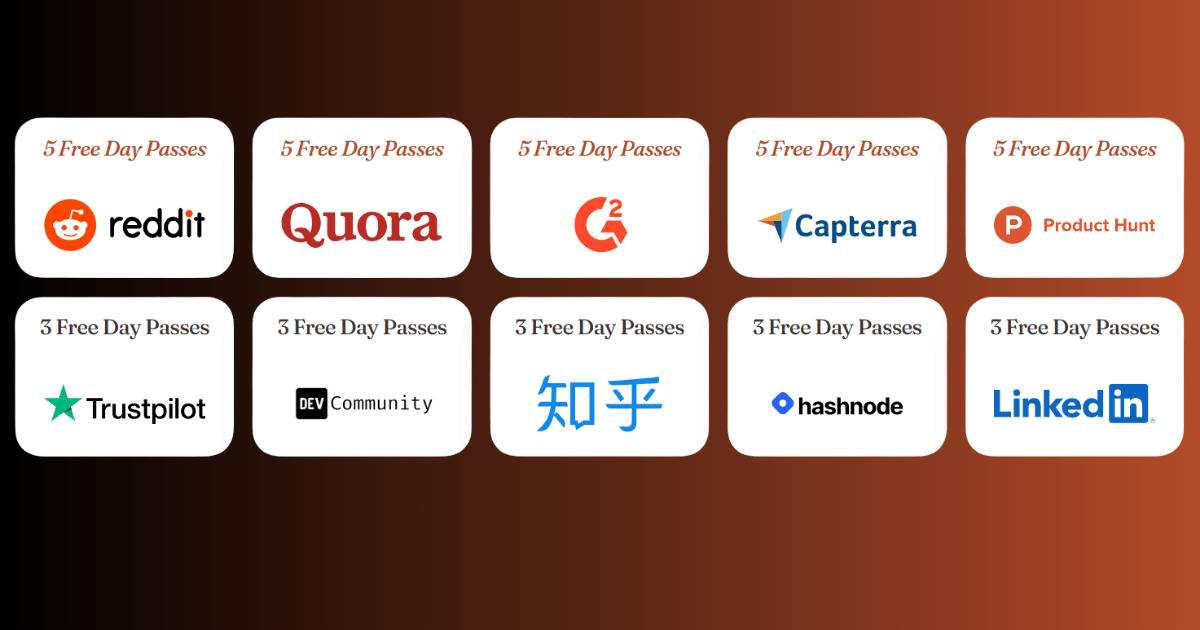
Get between 3 and 5 free Day Passes and check as many emails as you want. It’s literally unlimited.
The goal of this program is to allow you to test the TrustSender.io tool before purchasing Day Passes.
But it’s not free forever: You can make a maximum of 10 requests.
Each Day Pass allows you to check an unlimited number of emails within a 24-hour period.
If you have 5 Day Passes and use 1 per week, you will have enough for more than a month of email checks, which should be enough to keep your lists clean and up-to-date.
See details of the Bonus For Review Program at: TrustSender.io Bonus For Review Program
Related validation checks covered in this guide
- Email verification API for signup and product workflows.
- Email validation API for safer data capture.
- Bulk email verification for campaign preparation.
- Email list cleaning before cold outreach.
- Bulk email checker workflow for large CSV lists.
- Email bounce rate reduction through better list hygiene.
- Disposable email checker, catch-all handling and role based email detection.
- MX record validation, domain validation and syntax validation.
FAQ
What is an email verification API?
An email verification API is a service that allows software to check email addresses programmatically. It can help detect invalid, risky, disposable, role-based or uncertain addresses before they enter a database or workflow.
When is an email verification API worth integrating?
An email verification API is worth integrating when validation must happen automatically inside an app, form, checkout, signup process or continuous product workflow.
When is bulk email verification better than an API?
Bulk email verification is better when you already have a large list, CSV export, CRM file or cold outreach audience that needs to be cleaned before sending. It is usually faster than building an integration when the goal is campaign preparation.
Is bulk email verification cheaper than API integration?
It can be cheaper when validation is occasional, concentrated on specific days or needed before testing a campaign. Bulk validation can avoid engineering time, integration maintenance and unused monthly subscription costs.
Can bulk email verification help reduce bounce risk?
Yes. Bulk email verification can help identify undeliverable and risky addresses before outreach, which can reduce avoidable bounce risk. It does not guarantee inbox placement, but it supports cleaner campaign preparation and better sender reputation protection.
What should I do with risky email results?
Handle risky results separately from clearly deliverable or undeliverable records. Depending on the campaign, you can suppress, segment, review, recheck or use them with stricter sending limits.