










A catch-all email setup accepts messages sent to many or all addresses at the same domain, even when the specific mailbox may not exist. For example, a domain could accept messages for sales@example.com, hello@example.com, and even random-name-123@example.com.
That does not always mean every address is useful. It means the receiving server is not clearly rejecting unknown mailboxes during validation.
For senders, this creates uncertainty. A catch-all email can look valid during a check, but still be risky for campaign sending. It may reach a real inbox, route to a shared mailbox, disappear into a generic mailbox, or bounce later after the receiving system processes the message.
This is why catch-all addresses matter for email validation, email list cleaning, and email deliverability. They should not be treated exactly like clearly deliverable addresses or clearly invalid addresses.
Quick answer
A catch-all email is an address on a domain that accepts mail even when the exact mailbox cannot be confirmed. The domain may be configured to receive messages for any local part before the @.
Catch-all emails are not automatically bad, but they are risky. They can make email verification less certain, weaken list quality decisions, and create future bounce or engagement risk. The safest approach is to segment catch-all results as risky, review their source, and avoid mixing them blindly with your cleanest campaign segment.
Key takeaways
- Catch-all email domains accept mail broadly, which makes mailbox-level confirmation difficult.
- A catch-all result does not prove the person or mailbox exists.
- Catch-all contacts may be deliverable, risky, shared, inactive, or uncertain.
- Sending to too many uncertain contacts can affect email bounce rate, engagement, and sender reputation.
- Email validation should separate catch-all results from clearly deliverable and undeliverable contacts.
- TrustSender.io helps teams classify risky contacts before campaign launch.
What is a catch-all email?
A catch-all email setup allows a domain to accept messages sent to many different addresses, even when the exact mailbox is not known.
In a normal setup, a recipient server may reject a message if the mailbox does not exist. In a catch-all setup, the server may accept the message anyway.
This can be useful for the domain owner. A business may want to receive messages sent to common aliases, misspelled addresses, department names, or old addresses that no longer have a dedicated mailbox.
Examples include:
info@example.comsales@example.comsupport@example.comjohn@example.comrandomaddress@example.com
If all of those are accepted by the same domain, the domain may behave like catch-all.
The important point is not whether the domain exists. The domain may be real. The problem is that the mailbox-level result is uncertain.
Why catch-all emails are tricky to verify
Email validation usually works through several layers.
A tool can check whether the email format is valid. It can check whether the domain exists. It can check whether the domain has mail records. It may also try to understand whether the mailbox is likely to receive email.
Catch-all behavior makes the last part harder.
If a server accepts every address at the domain, a validator cannot always know whether jane@example.com is a real person, a real mailbox, a forwarding alias, a shared inbox, or just an accepted-but-uncertain address.
That is why catch-all results should be treated as a risk classification, not as a clean deliverable result.
Catch-all vs valid vs invalid emails
Catch-all addresses are often misunderstood because they sit between clear categories.
| Result type | Meaning | Recommended action |
|---|---|---|
| Deliverable | Address appears safe enough to send | Use in normal campaign segment |
| Undeliverable | Address is likely invalid or cannot receive mail | Remove or suppress |
| Catch-all | Domain accepts broadly, but mailbox is uncertain | Segment as risky and review |
| Unknown | The result cannot be confirmed confidently | Treat cautiously |
| Invalid | Syntax, domain, or mailbox appears broken | Remove or correct only from trusted source |
A catch-all email is not the same as an invalid email. It may work. But it is also not the same as a confirmed deliverable address.
Why catch-all emails can hurt list quality
They create uncertainty
The biggest issue with catch-all emails is not immediate failure. It is uncertainty.
You may not know whether the address belongs to a real person, a shared mailbox, a spam trap-like intake, a forwarding rule, or an unused destination.
When a campaign contains too many uncertain addresses, campaign planning becomes weaker.
They can reduce engagement
Some catch-all addresses may route to generic inboxes. Others may reach a mailbox that nobody checks. Some may be filtered internally.
This can lower open rates, click rates, reply rates, and conversion rates.
They can increase bounce risk later
Some catch-all domains accept first and reject later. Others change configuration over time. A contact that appears possible today may fail later.
This can increase future bounce risk, especially when the list is old or sourced from cold outreach data.
They can affect sender reputation
Sender reputation depends on repeated signals. If your campaigns send to many uncertain contacts, generate weak engagement, or produce bounces later, mailbox providers may trust your future campaigns less.
Catch-all addresses are not automatically dangerous, but sending to them without segmentation can create avoidable risk.
When catch-all emails may still be useful
Not every catch-all result should be deleted.
A catch-all address may still be useful when:
- The contact came from a direct customer signup.
- The person replied before.
- The address appears in billing or account data.
- The domain is a known customer domain.
- The contact has recent engagement.
- The email was collected through a trusted form.
- The address belongs to a known business relationship.
Context matters. A catch-all result from an engaged customer is different from a catch-all result in a scraped cold list.
When catch-all emails are high risk
Catch-all emails deserve extra caution when they come from:
- Purchased lists.
- Scraped lists.
- Old CRM exports.
- Cold outreach tools.
- Event lists with manual entry.
- Partner files without consent details.
- Free trial forms with weak validation.
- Gated content forms with low-intent signups.
In these cases, catch-all status adds uncertainty to an already risky source.
How to handle catch-all emails before sending
Segment them separately
Do not mix catch-all results with your cleanest deliverable segment. Put them in a separate file or audience group.
This allows you to control volume, monitor performance, and stop quickly if bounce or engagement signals are weak.
Review the source
A catch-all result from a trusted source may be acceptable. A catch-all result from a low-quality source may not be worth the risk.
Review where the contact came from before deciding what to do.
Start with small tests
If you choose to send to catch-all contacts, start with a small batch. Monitor bounces, replies, opens, complaints, and provider-specific issues.
Do not use catch-all-heavy segments for large first sends.
Avoid using catch-all contacts for warm-up
Warm-up should start with known, engaged, high-confidence contacts. Catch-all addresses are too uncertain for that purpose.
Suppress repeated failures
If a catch-all contact bounces, never engages, or creates repeated problems, suppress it from future campaigns.
How TrustSender.io helps
TrustSender.io helps teams validate and clean email lists before sending. Instead of treating every address as equally safe, TrustSender.io helps separate results into practical categories.
For catch-all email risk, TrustSender.io helps you:
- Identify uncertain contacts before campaigns.
- Separate risky results from safer contacts.
- Support email list cleaning before major sends.
- Reduce avoidable bounce risk.
- Prepare cleaner CSV files for email platforms.
- Protect sender reputation with better segmentation.
TrustSender.io does not guarantee inbox placement. No email checker can do that. Inbox placement also depends on authentication, sender reputation, content, complaints, engagement, sending volume, and mailbox-provider filtering.
But better classification gives your campaign a safer starting point.
Related TrustSender resources
- Invalid Email Addresses
- Disposable Email Addresses
- Email Bounce Checker
- Email Sender Reputation
- Email Validation Checker
- Clean Email List Before Sending
How to use TrustSender.io in free mode?
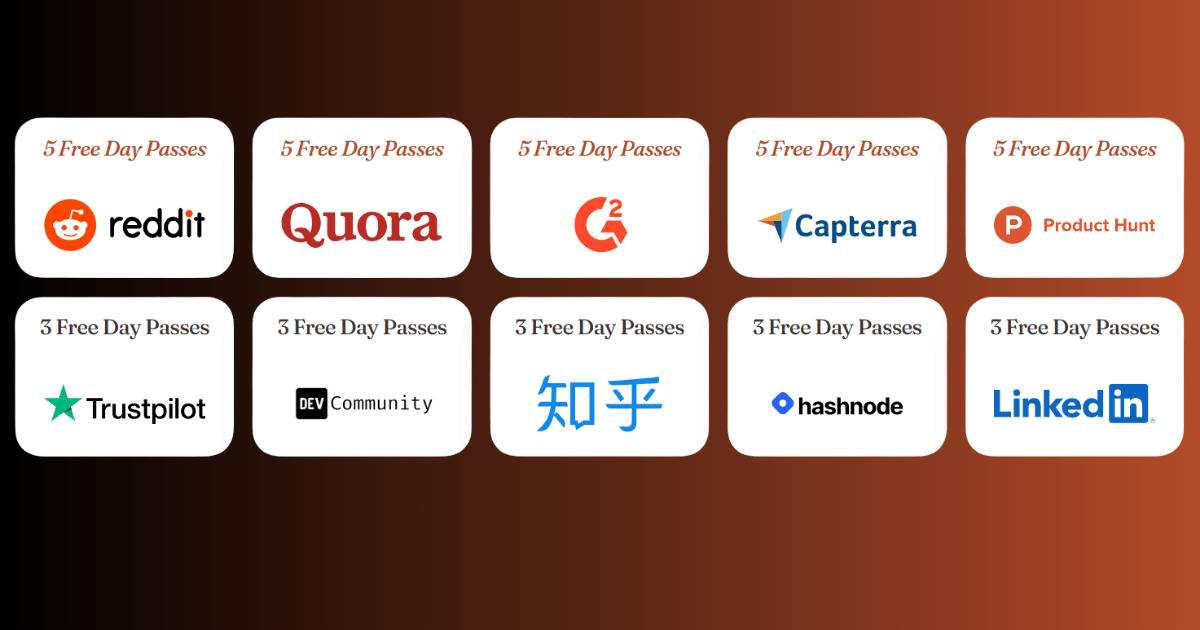
Get between 3 and 5 free Day Passes and check as many emails as you want. It’s literally unlimited.
The goal of this program is to allow you to test the TrustSender.io tool before purchasing Day Passes.
But it’s not free forever: You can make a maximum of 10 requests.
Each Day Pass allows you to check an unlimited number of emails within a 24-hour period.
If you have 5 Day Passes and use 1 per week, you will have enough for more than a month of email checks, which should be enough to keep your lists clean and up-to-date.
See details of the Bonus For Review Program at: TrustSender.io Bonus For Review Program
Related validation checks covered in this guide
- Catch-all email classification.
- Email validation.
- Email verification.
- Domain validation.
- MX record validation.
- Invalid email checker.
- Email list validation.
- Email list cleaning.
- Email bounce detection.
- Risky email classification.
- Sender reputation protection.
FAQ
What is a catch-all email?
A catch-all email is an address on a domain that accepts mail broadly, even when the exact mailbox cannot be confirmed. It may route messages to a general inbox or internal handling system.
Is a catch-all email valid?
It may be valid, but it is uncertain. A catch-all result means the domain accepts mail broadly, not that the specific mailbox definitely belongs to a real person.
Should I remove catch-all emails?
Not always. Segment them separately and review the source. Suppress them if they bounce, never engage, or come from low-quality sources.
Do catch-all emails hurt deliverability?
They can if you send to them without caution. Large numbers of uncertain contacts can lead to low engagement, future bounces, and weaker sender reputation signals.
How can I detect catch-all emails?
Use an email validation tool that checks domain and mailbox-level behavior and classifies catch-all or risky results separately.
How does TrustSender.io help with catch-all emails?
TrustSender.io helps classify risky contacts so you can separate catch-all results from safer addresses before campaigns.