










If you want to improve email deliverability, start before the campaign is launched. The inbox decision does not begin when someone reads your subject line. Instead, it starts with the signals that mailbox providers already see: your sender reputation, authentication, list quality, bounce history, complaint behavior, engagement, and sending pattern.
Many teams try to fix deliverability after the damage appears. For example, they rewrite a subject line, change a template, or resend the same campaign to the same audience. Sometimes that helps a little. However, most deliverability problems come from the full sending workflow, not from one isolated sentence.
A safer plan is to improve the system around every campaign. First, validate the list and suppress bad contacts. Then segment risky addresses, authenticate your domain, and send first to engaged recipients. Finally, monitor bounces and complaints, then scale only when the signals stay healthy.
Quick answer
To improve email deliverability, clean and validate your list before sending. Then remove invalid contacts, segment risky addresses, authenticate your domain with SPF, DKIM, and DMARC, avoid sudden volume spikes, send relevant content to engaged recipients, and monitor bounce, complaint, and engagement signals after every campaign.
No single tool can guarantee email deliverability. Instead, it depends on list quality, sender reputation, authentication, content, recipient engagement, sending volume, and mailbox-provider filtering.
Key takeaways
- Deliverability depends on technical, reputation, content, and list-quality signals.
- In addition, a clean email list is often safer than a larger but weaker list.
- Authentication helps prove sender identity, but it does not fix poor list hygiene.
- High bounce rates, spam complaints, and low engagement can weaken sender reputation.
- Risky email addresses should be separated from your cleanest audience.
- TrustSender.io helps teams validate lists before campaigns so they can reduce avoidable bounce and reputation risk.
What email deliverability really means
Email deliverability is the ability of your messages to reach the recipient’s inbox instead of being blocked, bounced, throttled, quarantined, or filtered into spam.
However, it is different from basic delivery.
A message can be “delivered” from your email platform’s perspective because the receiving server accepted it. Still, the recipient may never see it in the primary inbox. For instance, it may land in spam, promotions, quarantine, or another filtered area.
That is why deliverability work must look at the whole chain:
- Can the message be accepted?
- Can the sender be trusted?
- Is the recipient likely to want the message?
- Is the list clean enough?
- Does the content match the recipient’s expectations?
- Are bounces and complaints under control?
- Is the sending pattern stable?
As a result, the inbox result can suffer when one part of the chain is weak.
Why email deliverability drops
The list has too many invalid contacts
Invalid addresses create hard bounces. In turn, a high bounce pattern tells receiving systems that the list may be old, purchased, scraped, mistyped, or poorly maintained.
Fortunately, this is one of the easiest problems to reduce before sending.
The sender reputation is weak
Sender reputation develops from repeated behavior. Over time, bounces, spam complaints, low engagement, spam trap hits, blocklist issues, and sudden sending spikes can all reduce trust.
Reputation can take time to recover. Therefore, prevention is usually easier than repair.
Authentication is incomplete
SPF, DKIM, and DMARC help mailbox providers understand whether your domain can send the message legitimately.
Authentication does not guarantee inbox placement. However, missing or misaligned authentication can make a legitimate message look suspicious.
Recipients are not engaging
Mailbox providers also look for signs that recipients want your emails.
Positive signals can include opens, clicks, replies, folder moves, and low complaint rates. On the other hand, negative signals can include ignores, deletions, spam reports, and long-term non-engagement.
As a result, future campaigns may be filtered more aggressively if too many recipients ignore your messages.
Sending volume changed too quickly
In addition, sudden volume spikes can look risky, especially from a new domain, new IP, new platform, or recently inactive sender.
By contrast, a gradual, predictable sending pattern is easier for mailbox providers to trust.
Risky contacts were mixed with safe contacts
Not every address should receive the same campaign.
For example, catch-all addresses, disposable emails, unknown results, old non-engagers, role-based contacts, and previous soft bounces should be reviewed separately. Otherwise, mixing them with your best audience can weaken the whole campaign’s signal.
A practical plan to improve email deliverability
Step 1: Validate your list before sending
Start with list quality. If the list is weak, the rest of the campaign has a harder job.
For example, use email validation to identify:
- Invalid addresses.
- Malformed addresses.
- Bad or inactive domains.
- Disposable email addresses.
- Catch-all results.
- Unknown results.
- Risky email addresses.
- Previous failure patterns.
The goal is not only to remove bad contacts. Instead, the goal is to separate contacts by confidence level before sending.
Step 2: Remove or suppress undeliverable contacts
Keep undeliverable contacts out of active campaigns. For example, remove or suppress hard bounces, invalid addresses, broken domains, and malformed records.
In many cases, suppression is safer than deletion because it prevents the same bad address from being imported again later.
Step 3: Segment risky contacts
Risky does not always mean useless. Instead, it means uncertain.
Create a separate segment for catch-all, disposable, unknown, role-based, old inactive, or low-confidence contacts. Also, do not use them for warm-up, reputation recovery, or your most important launch.
If you decide to send to risky contacts, send in small batches and monitor the result carefully.
Step 4: Send first to engaged contacts
When deliverability matters, start with people most likely to recognize and engage with your message.
For example, good early recipients include:
- Recent subscribers.
- Active customers.
- Recent buyers.
- Recent clickers.
- People who replied before.
- Confirmed opt-in contacts.
- Contacts collected directly from trusted forms.
In contrast, avoid starting with old exports, cold files, low-intent leads, and unvalidated imports.
Step 5: Review sender authentication
Check SPF, DKIM, and DMARC before major sends. In addition, review domain alignment, reverse DNS where relevant, and whether your email platform is authorized to send for your domain.
Review authentication whenever you add a new sending platform, change DNS, move providers, or separate marketing and transactional streams.
Step 6: Control sending volume
Do not suddenly send a large campaign to an old or untested audience.
Instead, increase volume gradually, especially when using a new domain, new IP, new platform, or reactivated list. Watch bounce rate, complaint rate, deferrals, blocks, and engagement as you scale.
If negative signals rise, pause and review the affected segment.
Step 7: Make content clear and expected
Content should match the recipient’s expectation.
Therefore, use a clear sender name, honest subject line, visible unsubscribe link, and message body that explains why the email is relevant. Avoid misleading reply-style subjects, excessive urgency, hidden content, suspicious links, and heavy image-only layouts.
In short, the message should be easy to understand even without complex design.
Step 8: Make unsubscribe easy
A clean unsubscribe is better than a spam complaint.
People who no longer want your emails should be able to leave without friction. If unsubscribe is hidden, broken, or confusing, recipients may click “Report spam” instead.
That complaint is a stronger negative signal than a normal unsubscribe.
Step 9: Monitor results by source
Do not only monitor the campaign average. Instead, track results by list source.
A campaign may look acceptable overall while one import source creates most of the bounces, complaints, risky addresses, or non-engagement.
For example, track:
- Bounce rate.
- Complaint rate.
- Open and click trends.
- Blocks and deferrals.
- Spam-folder feedback.
- Risky classifications.
- Unsubscribe rate.
- Source-level performance.
As a result, you can fix the source, not only the current campaign.
Deliverability checklist before a campaign
| Check | Why it matters | Action |
|---|---|---|
| List validated | Reduces invalid contacts | Validate before upload or send |
| Undeliverable contacts suppressed | Prevents repeated hard bounces | Keep failures out of future campaigns |
| Risky contacts segmented | Protects clean audiences | Separate catch-all, disposable, and unknown results |
| SPF/DKIM/DMARC reviewed | Confirms sender identity | Fix missing or misaligned records |
| Sending volume controlled | Avoids suspicious spikes | Increase gradually |
| Engaged contacts prioritized | Improves early signals | Send to recent active contacts first |
| Unsubscribe tested | Reduces complaints | Confirm opt-out works |
| Content reviewed | Reduces filter triggers | Use clear, honest messaging |
| Source quality tracked | Finds bad imports | Label every list and campaign source |
| Metrics monitored | Detects problems early | Watch bounces, complaints, blocks, and engagement |
Use this checklist before large sends, reactivation campaigns, imported CSV files, cold outreach, product announcements, and any campaign after a deliverability issue. In addition, repeat it whenever you change sending platforms, domains, templates, or list sources.
What not to do
Do not blame only the subject line
Subject lines matter, but they are rarely the whole problem. For instance, a weak list, bad authentication, or poor reputation can hurt a campaign before the subject line gets a fair chance.
Do not send to the whole database after a long pause
Old lists decay over time. People change jobs, abandon inboxes, close domains, and forget brands. Therefore, validate and segment before sending again.
Do not keep mailing chronic non-engagers
A sunset policy helps protect sender reputation. If someone has not engaged for a long time, reduce frequency, run a careful reactivation, or suppress the contact from normal campaigns.
Do not treat all “valid” addresses as equal
Some addresses can be technically possible but still risky. For example, catch-all, disposable, role-based, and unknown results need separate handling.
Do not clean only after a bounce spike
Bounce reports arrive after the failed send. Therefore, pre-send email list cleaning helps reduce preventable damage before it happens.
How TrustSender.io helps
TrustSender.io helps teams improve email deliverability by cleaning and validating email lists before campaigns.
TrustSender.io helps you:
- Identify invalid contacts before they create hard bounces.
- Separate risky email addresses from safer contacts.
- Support email list cleaning before major sends.
- Reduce avoidable email bounce rate pressure.
- Prepare cleaner CSV files for email platforms.
- Improve email hygiene before sending.
- Protect sender reputation with better list control.
However, TrustSender.io does not guarantee inbox placement. No email checker can do that. Inbox placement also depends on authentication, sender reputation, consent, content, complaints, engagement, sending volume, and mailbox-provider filtering.
Still, cleaner data gives every campaign a safer starting point.
Related TrustSender resources
- Email Sender Reputation
- Emails Going to Spam
- Email Blacklist Check
- Why Was My Email Blocked
- Spam Trap Checker
- Email Bounce Checker
- Reverse DNS Lookup
How to use TrustSender.io in free mode?
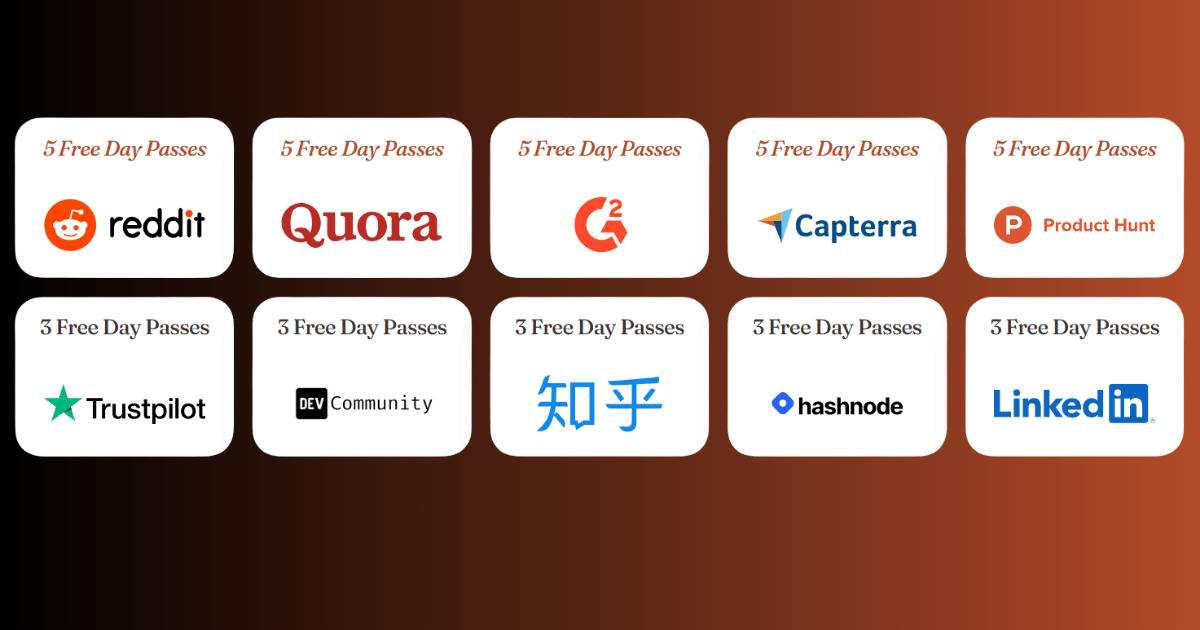
Get between 3 and 5 free Day Passes and check as many emails as you want. It’s literally unlimited.
The goal of this program is to allow you to test the TrustSender.io tool before purchasing Day Passes.
But it’s not free forever: You can make a maximum of 10 requests.
Each Day Pass allows you to check an unlimited number of emails within a 24-hour period.
If you have 5 Day Passes and use 1 per week, you will have enough for more than a month of email checks, which should be enough to keep your lists clean and up-to-date.
See details of the Bonus For Review Program at: TrustSender.io Bonus For Review Program
Related validation checks covered in this guide
- Email validation.
- Email verification.
- Email list cleaning.
- Email list validation.
- Invalid email checker.
- Email bounce detection.
- Risky email classification.
- Disposable email detection.
- Catch-all classification.
- Sender reputation protection.
FAQ
How can I improve email deliverability?
Start with list quality. Then validate your list, suppress invalid contacts, segment risky addresses, authenticate your domain, send to engaged recipients first, control volume, and monitor bounce and complaint signals.
Does email validation guarantee inbox placement?
No. Email validation reduces list-quality risk, but inbox placement also depends on authentication, sender reputation, content, engagement, complaints, consent, and mailbox-provider filtering.
What hurts email deliverability the most?
Common causes include invalid contacts, high bounce rates, spam complaints, weak authentication, poor sender reputation, spam traps, old lists, sudden volume spikes, and low engagement.
How often should I clean my email list?
Clean before major campaigns, after imports, before reactivation sends, and whenever a segment has not been used recently. In general, older or lower-engagement lists should be checked more often.
Should I remove inactive subscribers?
Often, yes. Long-term non-engagers can hurt sender reputation. Therefore, use a sunset policy, careful reactivation, or suppression instead of sending indefinitely.
How does TrustSender.io help?
TrustSender.io validates email lists and separates deliverable, risky, and undeliverable contacts so teams can reduce avoidable bounce and list-quality risks before sending.