











If you need to verify an email before sending a campaign, the goal is not only to check whether the address looks real. Instead, the real goal is to reduce avoidable risk before bounces, complaints, weak engagement, and poor list quality affect your sender reputation.
One bad address will not destroy a campaign. However, a list full of invalid, stale, disposable, mistyped, catch-all, or risky email addresses can create a pattern that mailbox providers do not trust. As a result, future campaigns may face more bounces, spam placement, throttling, or blocks.
The safer workflow is simple: verify the email, classify the risk, suppress obvious failures, segment uncertain contacts, and send first to the cleanest audience. That way, email verification becomes part of sender reputation protection, not just a last-minute cleanup step.
Quick answer
To verify an email, check whether the address has a valid format, whether the domain exists, whether the domain can receive email, and whether the address appears deliverable, risky, or undeliverable. For campaign safety, however, do not treat every “possible” address as equally safe.
Email verification helps reduce invalid contacts, avoidable hard bounces, and list-quality risk. However, it does not guarantee inbox placement. In addition, sender reputation depends on authentication, consent, engagement, complaints, sending volume, content, and mailbox-provider filtering.
Key takeaways
- Email verification is a pre-send risk check, not an inbox guarantee.
- However, a verified-looking address can still be risky if it is catch-all, disposable, role-based, stale, or unengaged.
- In addition, invalid contacts can increase bounce pressure and weaken sender reputation.
- Therefore, risky contacts should be segmented instead of mixed with your best audience.
- Also, email validation works best when paired with suppression, list source tracking, and engagement monitoring.
- TrustSender.io helps teams separate deliverable, risky, and undeliverable contacts before campaigns.
What does it mean to verify an email?
To verify an email means checking whether an address is likely to be usable before you send to it.
For example, a complete verification process may include:
- Syntax validation.
- Domain validation.
- MX record validation.
- Disposable email detection.
- Role-based email detection.
- Catch-all risk detection.
- Known bounce or suppression checks.
- Risk classification.
- List source review.
- Engagement history review, when available.
This process does not prove that a specific person will open, click, or want your message. Instead, it helps you reduce obvious list-quality problems before sending.
Why email verification matters for sender reputation
Sender reputation develops from repeated behavior. If your campaigns often reach invalid addresses, create complaints, or generate weak engagement, mailbox providers may become less willing to trust your future email.
In practice, email verification helps because it reduces preventable risk before the campaign starts.
Reduce hard bounces
Hard bounces often happen when an address cannot receive the message. For example, invalid addresses, abandoned mailboxes, broken domains, and bad imports can all create hard bounces.
As a result, when a campaign produces many hard bounces, the list may look stale, purchased, scraped, or poorly maintained.
Improve list hygiene
A clean email list is not only smaller. It is also easier to trust.
By removing or suppressing undeliverable contacts, you reduce repeated failures. In addition, separating risky contacts helps you avoid exposing your best audience to weaker list-quality signals.
Protect sender reputation
Mailbox providers look for patterns. Therefore, a sender that repeatedly sends to invalid or unwanted contacts may look careless.
Verification helps show that your campaign preparation is controlled, especially when you combine it with opt-in, suppression, clear unsubscribe, and stable sending volume.
Make campaign analysis cleaner
If you send to a dirty list, campaign metrics become harder to interpret.
Low open rates may come from weak content, poor targeting, spam placement, invalid addresses, or old contacts. After verification, however, it becomes easier to evaluate content, offer, segmentation, and timing.
What email verification can and cannot do
What it can do
For example, email verification can help you:
- Find invalid addresses.
- Catch formatting mistakes.
- Detect domains that cannot receive mail.
- Reduce obvious hard-bounce risk.
- Identify disposable addresses.
- Flag catch-all or uncertain results.
- Segment risky contacts.
- Prepare cleaner CSV files for email platforms.
- Support sender reputation protection.
What it cannot do
However, email verification cannot guarantee that:
- The message will reach the inbox.
- The recipient wants your email.
- The recipient will open or click.
- The address belongs to the person you expect.
- A catch-all address will accept the message.
- A mailbox provider will trust your domain.
- A risky contact is safe to send at full volume.
Therefore, verification should be part of a broader deliverability workflow.
How to verify an email before sending
Step 1: Check the address format
First, start with syntax.
A valid address should follow normal email address formatting rules. For instance, typos such as missing @, duplicated domains, spaces, invalid characters, or broken top-level domains should be corrected or removed before sending.
This step catches basic mistakes, but it is not enough by itself.
Step 2: Validate the domain
Next, check whether the domain exists and looks usable.
Domain validation helps identify addresses linked to mistyped, expired, parked, or nonexistent domains. For example, a contact using gmial.com instead of gmail.com may be a typo rather than a real subscriber.
Step 3: Check mail-receiving records
A domain may exist but still be unable to receive email. Therefore, MX record validation helps confirm whether the domain has mail servers configured.
If a domain cannot receive email, sending to addresses at that domain is usually unsafe.
Step 4: Detect disposable addresses
Disposable email addresses may work briefly and then disappear. They often appear in free trials, fake signups, low-intent forms, and abuse-prone workflows.
A disposable address is not always malicious. However, it should not be treated with the same confidence as a stable business or personal address.
Step 5: Identify catch-all risk
A catch-all domain may accept messages for many addresses, even when the specific mailbox does not exist.
This can make verification tricky. The domain may appear to accept email, but the specific address may still be uncertain. For that reason, catch-all results should usually be classified as risky, not fully safe.
Step 6: Separate role-based addresses
Role-based addresses such as info@, sales@, support@, or admin@ can be valid. However, they often represent a team or function rather than a specific person.
For some use cases, they are acceptable. For personalized outreach or subscriber campaigns, however, they may be less reliable and more likely to create weak engagement.
Step 7: Use suppression history
A contact that previously hard-bounced, complained, unsubscribed, or failed validation should not return to active sending by accident.
In many cases, suppression is safer than deletion because it prevents the same bad address from being re-imported later.
Step 8: Review the source
Finally, list source matters.
A directly collected opt-in address is different from an old export, scraped list, purchased file, event badge scan, or cold lead import. Even when an address passes technical checks, weak source quality can still create complaints or low engagement.
How to classify verification results
| Result | What it means | Recommended action |
|---|---|---|
| Deliverable | The address passed key checks | Send normally if consent and relevance are clear |
| Undeliverable | The address failed validation | Suppress before sending |
| Risky | The address may work, but confidence is lower | Segment and review before sending |
| Disposable | The address may be temporary | Suppress or segment depending on use case |
| Catch-all | The domain may accept broad mail | Treat as uncertain and avoid high-risk sends |
| Role-based | The address belongs to a function or team | Use only when the context fits |
| Unknown | The result could not be confirmed | Review source and send cautiously, if at all |
The best workflow does not force every contact into “send” or “delete.” Instead, it separates confidence levels so you can make safer campaign decisions.
Verification checklist before a campaign
| Check | Why it matters | Action |
|---|---|---|
| Syntax checked | Finds basic mistakes | Remove malformed addresses |
| Domain validated | Finds broken or mistyped domains | Correct or suppress bad domains |
| MX records checked | Confirms mail-receiving setup | Suppress domains that cannot receive mail |
| Disposable emails flagged | Reduces temporary-address risk | Suppress or segment |
| Catch-all results separated | Avoids false confidence | Treat as risky |
| Role-based addresses reviewed | Protects personalization quality | Use only when context fits |
| Previous bounces suppressed | Prevents repeated failures | Keep failures out of future campaigns |
| List source labeled | Finds risky acquisition channels | Track every import source |
| Engaged segment prioritized | Improves early signals | Send to recent active contacts first |
| Results monitored | Detects issues early | Watch bounces, complaints, and blocks |
Use this checklist before newsletters, product announcements, cold outreach, old-list reactivation, CSV imports, and any campaign after a deliverability issue. In addition, repeat it whenever you import a new source or reactivate an old segment.
Common mistakes when verifying emails
Treating “valid” as “safe”
A valid address may still be risky. For example, it may be catch-all, disposable, role-based, old, unengaged, or collected without clear permission.
Verifying only after a bounce spike
Bounce reports arrive after damage has already happened. Therefore, pre-send verification helps reduce preventable failures before they reach mailbox providers.
Sending risky contacts with the best audience
Mixing risky contacts with engaged subscribers can weaken campaign signals. Instead, segment uncertain contacts and protect your cleanest audience.
Ignoring list source quality
A technically valid address from a poor source can still create complaints. As a result, consent, relevance, and expectation still matter.
Re-importing failed contacts
If failed contacts return through future CSV imports, the same problems repeat. Suppression helps prevent that cycle.
How TrustSender.io helps
TrustSender.io helps teams verify email lists before sending and separate contacts by risk level.
TrustSender.io helps you:
- Identify invalid contacts before they create hard bounces.
- Separate risky email addresses from safer contacts.
- Support email list cleaning before major sends.
- Reduce avoidable email bounce rate pressure.
- Prepare cleaner CSV files for email platforms.
- Improve email hygiene before sending.
- Protect sender reputation with better list control.
However, TrustSender.io does not guarantee inbox placement. No email checker can do that. Inbox placement also depends on authentication, sender reputation, consent, content, engagement, complaints, sending volume, and mailbox-provider filtering.
Still, cleaner list data gives every campaign a safer starting point.
Related TrustSender resources
- Email Address Validity Check
- Invalid Email Addresses
- Catch-All Email Risk
- Disposable Email Addresses
- Email Bounce Checker
- Email Sender Reputation
How to use TrustSender.io in free mode?
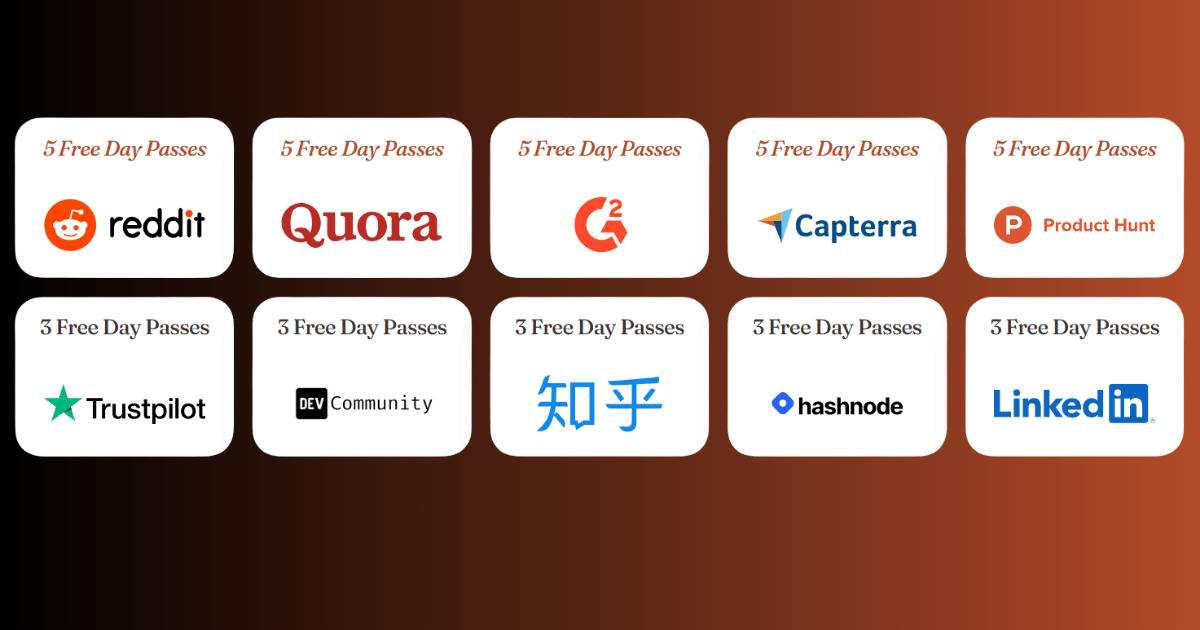
Get between 3 and 5 free Day Passes and check as many emails as you want. It’s literally unlimited.
The goal of this program is to allow you to test the TrustSender.io tool before purchasing Day Passes.
But it’s not free forever: You can make a maximum of 10 requests.
Each Day Pass allows you to check an unlimited number of emails within a 24-hour period.
If you have 5 Day Passes and use 1 per week, you will have enough for more than a month of email checks, which should be enough to keep your lists clean and up-to-date.
See details of the Bonus For Review Program at: TrustSender.io Bonus For Review Program
Related validation checks covered in this guide
- Email validation.
- Email verification.
- Email list cleaning.
- Email list validation.
- Invalid email checker.
- Domain validation.
- MX record validation.
- Email bounce detection.
- Disposable email detection.
- Catch-all classification.
- Risky email classification.
- Sender reputation protection.
FAQ
What does it mean to verify an email?
To verify an email means checking whether the address is formatted correctly, linked to a usable domain, able to receive mail, and safe enough to include in a campaign.
Can email verification guarantee delivery?
No. Email verification reduces list-quality risk, but delivery also depends on authentication, sender reputation, engagement, content, consent, sending volume, and mailbox-provider filtering.
Is a catch-all email verified?
Not fully. A catch-all domain may accept email broadly, but the specific mailbox may still be uncertain. Therefore, treat catch-all results as risky.
Should I delete invalid emails?
Suppression is often safer than deletion because it prevents the same invalid address from returning through a later import.
How often should I verify emails?
Verify before major campaigns, after CSV imports, before old-list reactivation, and whenever a segment has not been used recently.
How does TrustSender.io help?
TrustSender.io validates email lists and separates deliverable, risky, and undeliverable contacts so teams can reduce avoidable bounce and list-quality risks before sending.